Response
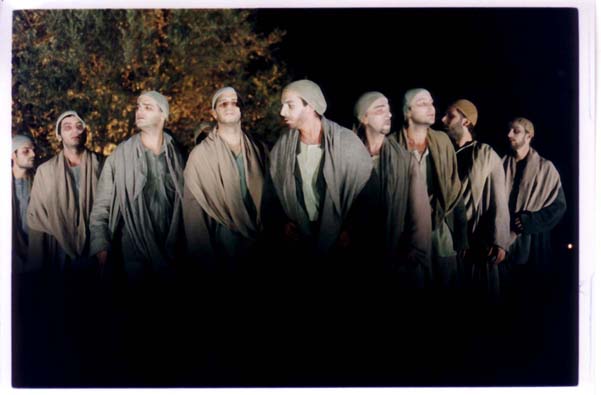
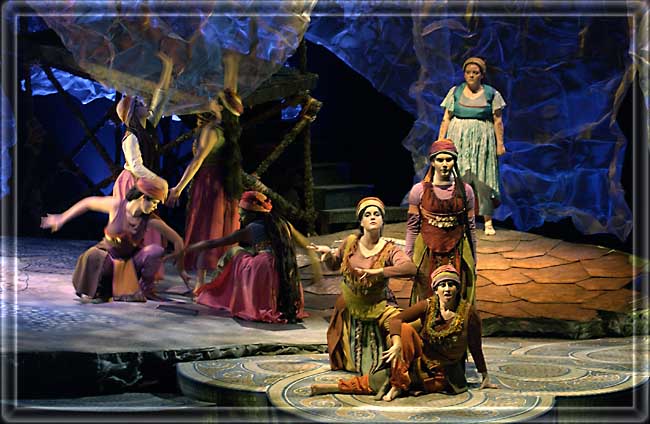
The Greek tragedies are some of the oldest know plays still in existence today. There are three major extant playwrights (Aeschylus, Sophocles, and Euripides) that have works still being produced thousands of years later. In my research I have found various production photos from the works of these Greek tragedians. I discovered a wide variety of elements to each production that make the individual production unique to the world the director was trying to create. Although none of the pictures are alike, I included pictures of the same play being produced by different companies and the world created by each playhouse was completely different and unique. This outcome allows me to make the assumption that classic Greek tragedy is easily adaptable and can allow the director and creative team to dream big and create extreme circumstances.
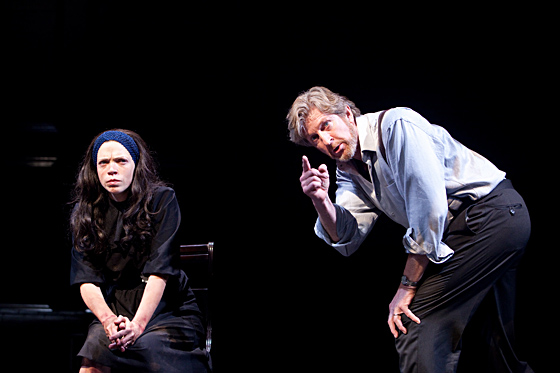
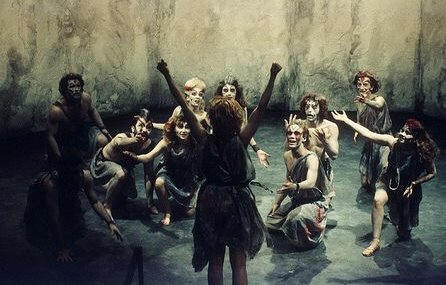
The extreme nature of the tragedies themselves helps show the flexibility of each piece. This flexibility allows the director to add his own texture and tone too the piece. For example, Sophocles’ Oedipus the King done by Ridge Theatre Company looks totally different than Phillip Seville’s 1967 performance of the same piece. Seville’s performance of the piece seems to have a detailed set and costume design that is quite natural and historically accurate for the time. Yet, Ridge Theatre Company’s 2008 production of the same piece has a minimalist approach toward the same design areas. In the Ridge Theatre Company production, the use of simple technology is embraced and projections are used to provide an inference of the setting of the play. These projections seem to all be historical pictures of actual Greek locations but the man playing Oedipus is clearly dressed in modern dress setting the play in a modern time. Time periods seem to be interchangeable with the piece.
In finding various pictures of the many productions of these Greek tragedians, I am amazed at how different the setting of each production looks throughout the time period. The example I listed above sites a trend in the movement and changes in style of a production. All of the pictures I found from earlier productions as in the 1950’s and 60’s have a realistic approach to their design and one can assume acting style. The 50’s highlighted the arrival of Method acting technique and realism. With the arrival of Brando in Tennessee Williams’ Streetcar Named Desire (1951), realistic acting approach was quite popular during the 50’s. The postmodern style movement in theatre seems to have had a heavy hand in influencing the plays from the 90’s and on. Minimalist sets with suggestive lights and costumes are all the rage right now. I am interested to see that the majority of the productions I have found in the 2000’s have no large-scale sets containing historically accurate scenic elements that set the play in a historical time. Instead, everything is quite minimal and the focus is more on the acting. Gone seem to be the epics of the 60’s. A good example of this can be found in Public Theatre’s 2009 production of Euripides' The Bacchae in which Jonathan Groff of Spring Awakening fame brings a modern touch to Euripides’ 2000+-year-old play.